
MONITORING AND EVALUATION PORTAL OF THE CENTER FOR ANALYSIS OF ECONOMIC REFORMS AND COMMUNICATION
 |
"We must boldly follow the path of market economy" Heydar Aliyev
|
The Great Return in a new phase: sustainable settlement and economic development
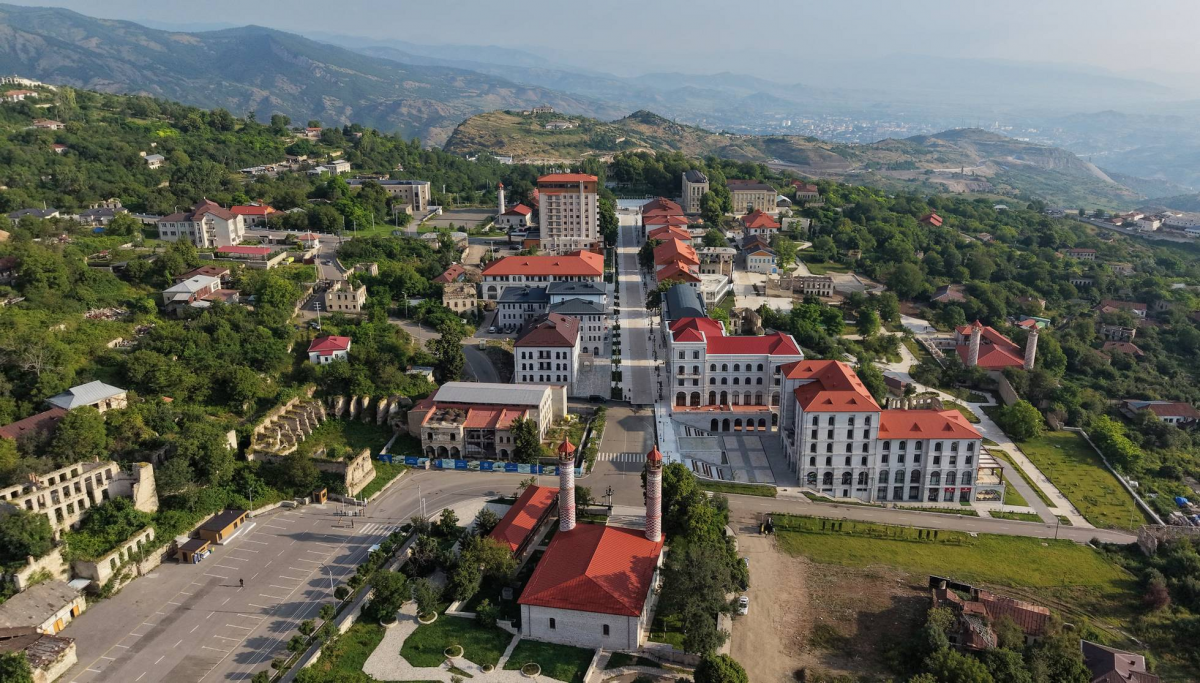
The restoration of the territories liberated from occupation and the return of former internally displaced persons to their homelands are considered an integral part of long-term socio-economic development. In these circumstances, the success of the state is determined not only by the restoration of infrastructure, but also by the sustainable settlement of the returning population, employment provision, and reintegration of the region into the country's economy. It is these criteria that distinguish the First State Program on the Great Return as a unique model of post-conflict reconstruction in international practice.
President Ilham Aliyev, speaking at the 8th Congress of the New Azerbaijan Party, said that 96 thousand people live, work, and study in Karabakh and East Zangezur. 28 billion manats have been allocated for the development of these regions so far, and former internally displaced persons have already settled in 48 settlements.
Commenting on the topic, Tarana Salifova, Deputy Executive Director of the Center for Analysis of Economic Reforms and Communication (CERACC), said that the Great Return has already moved from the construction stage to the stage of sustainable settlement and restoration of economic life. Although this process primarily involves the physical return of internally displaced persons to their native lands, it can also be assessed as the formation of a long-term socio-economic development, institutional management and sustainable settlement model. The Great Return is being implemented in a planned and phased manner within the framework of the State Program, and the fundamental conditions for return, including mine clearance in the first stage, the construction of a road and transport network, and the restoration of energy, water and communication lines, have been identified as fundamental conditions for return.
One of the main issues in the next stage is the expansion of the geographical area of return and the strengthening of the socio-economic security of the returning population. 118 families consisting of 365 people were sent to Agdam city, 2 families consisting of 10 people to Sarijali village, 4 families consisting of 11 people to Chapar village of Agdere district, 4 families consisting of 9 people to Ashagi Oratagh village, 5 families consisting of 18 people to Vangli village, 1 family consisting of 4 people to Jabrayil city, 58 families consisting of 362 people to Shukurbayli village, 3 families consisting of 13 people to Khankendi city, 5 families consisting of 22 people to Karkijahan settlement, 17 families consisting of 78 people to Khojaly city, 1 family consisting of 4 people to Ballica village, 3 families consisting of 15 people to Khanabad village, 5 families consisting of 22 people to Khanyurdu village, 7 families consisting of 31 people to Tazabina village, 49 families consisting of 190 people to Khojavand city, 9 families consisting of 44 people to Kirmizi Bazar settlement families, 8 families consisting of 41 people were resettled in the village of Guzeykhirman, 1 family consisting of 4 people in the village of Guneykhirman, 1 family consisting of 4 people in the village of Khojavandkend, and 1 family consisting of 4 people in the city of Lachin. In total, 302 families consisting of 1,251 people were resettled during September 2026.
Tarana Salıfova emphasized that currently the process is also viewed as socio-economic recovery. Employment, social protection, access to education and health services of the returning population are among the state priorities. The returning population is provided with jobs in their native lands and is building a decent life. The visible results of this approach are also visible on the industrial map. Production centers such as the Agdam Industrial Park and the Araz Valley Economic Zone, smart village and smart city projects, investment and tax incentives are expanding economic activity in the region. This year, the opening ceremonies of the work glove production enterprise of "GP Safety" LLC in the city of Khankendi and the "Qarabagh Tekstil Evi" LLC in the city of Khojaly were held with the participation of President Ilham Aliyev. The "AzCement" enterprise, operating in the Askeran settlement of the Khojaly region, produces cement with an annual capacity of 60 thousand tons, and it is planned to employ 70 people.
As part of the development of the mining industry, the "Demirli" Ore Processing Complex has started operating in the Janyatag village of the Aghdara region. This is the first project to start operating in the mining sector in the liberated territories and it is planned to export 85 thousand tons of copper metal. The complex provides 980 people with permanent jobs, 260 of whom are former internally displaced persons and returning residents, and the number of jobs will be increased to 1,250 in the coming years.
As the head of state emphasized, the Great Return will proceed even faster in the coming years. The return does not end with the construction of houses, its sustainability is ensured by the restoration of employment, social services and economic activity. From an economic point of view, the Great Return means the reactivation of the potential of the regions, and this approach, in addition to increasing social well-being, aims to turn the region into an active subject of the country's economy.


|
About
General information
Rules
|
Media
News
Photos
Videos |


